Can Colombia win the 2026 World Cup?
Last updated
Colombia has never won a World Cup title, but their placement in Group K alongside Portugal, DR Congo, and Uzbekistan gives them a realistic path to the knockout rounds in 2026. While winning the entire tournament remains unlikely given competition from traditional powerhouses, Colombia's golden generation could achieve their best-ever World Cup performance.
The Coffee Growers face a challenging group with European giants Portugal as the likely group winners, but should be favored over DR Congo and Uzbekistan for the second qualification spot.
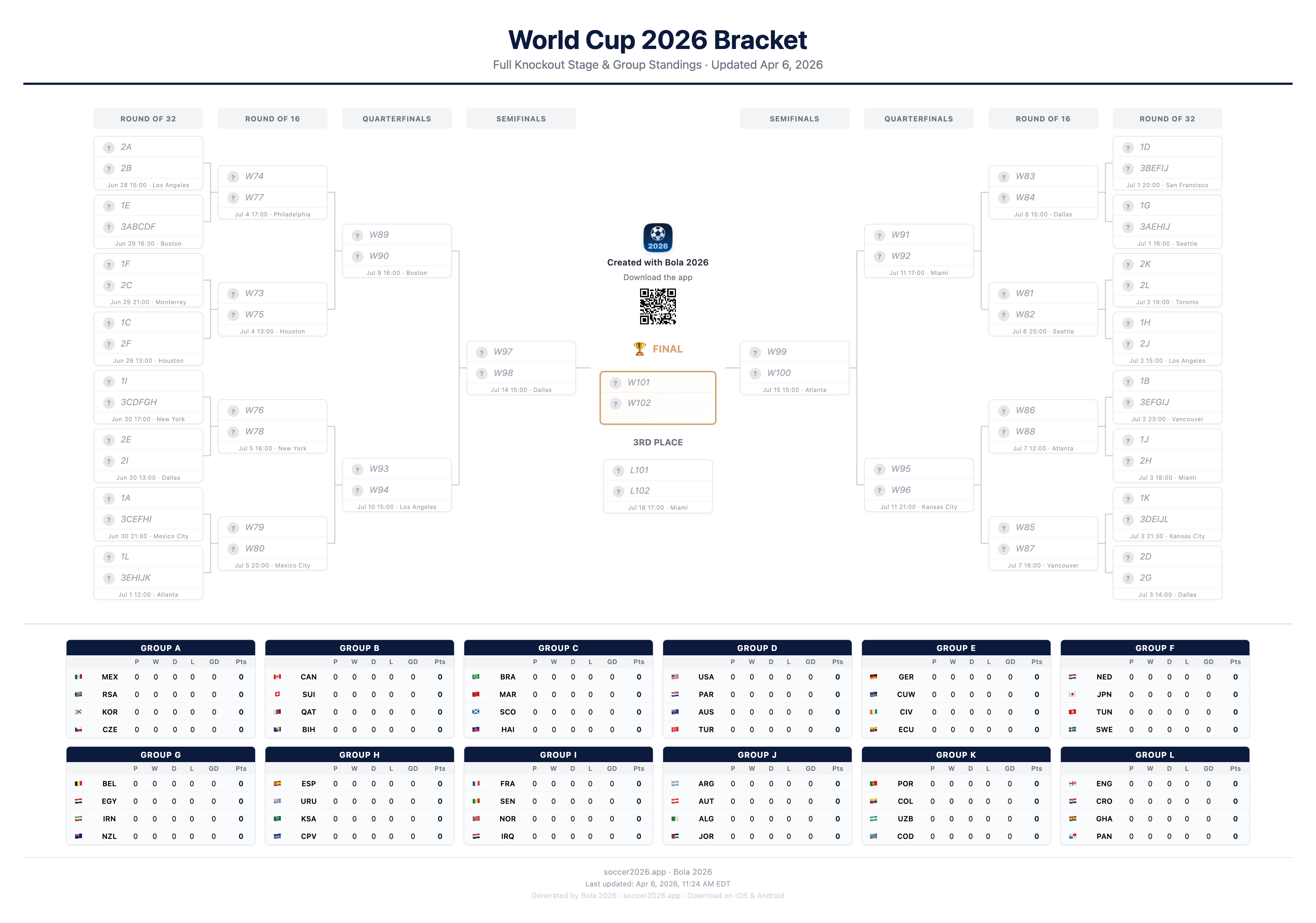
Group K Analysis and Path Forward
Colombia's Group K presents both opportunity and challenge. Portugal enters as clear favorites with their star-studded squad, but Colombia should be confident of securing second place. DR Congo brings physicality and pace from African football, while Uzbekistan represents the weakest opponent on paper. Finishing second would likely mean avoiding the group winners from other tough groups in the Round of 16.
Key Players and Strengths
Colombia's strength lies in their technical ability and creativity in midfield and attack. Their players compete at the highest levels in European leagues, bringing valuable experience. The team typically excels at quick passing combinations and set pieces. Fans can track Colombia's progress and build tournament brackets on Bola 2026 as the competition unfolds. Remember to convert all match times from UTC to your local timezone for viewing.
Frequently asked questions
What is Colombia's best World Cup performance?
Colombia's best World Cup finish was reaching the quarter-finals in 2014 in Brazil, where they were eliminated by the host nation.
Who are the toughest opponents in Colombia's group?
Portugal is clearly the strongest team in Group K, with DR Congo likely providing the main competition for Colombia's second-place qualification spot.
How realistic are Colombia's World Cup winning chances?
While Colombia has quality players, winning the 2026 World Cup remains unlikely given competition from traditional powers like Brazil, Argentina, France, and others.